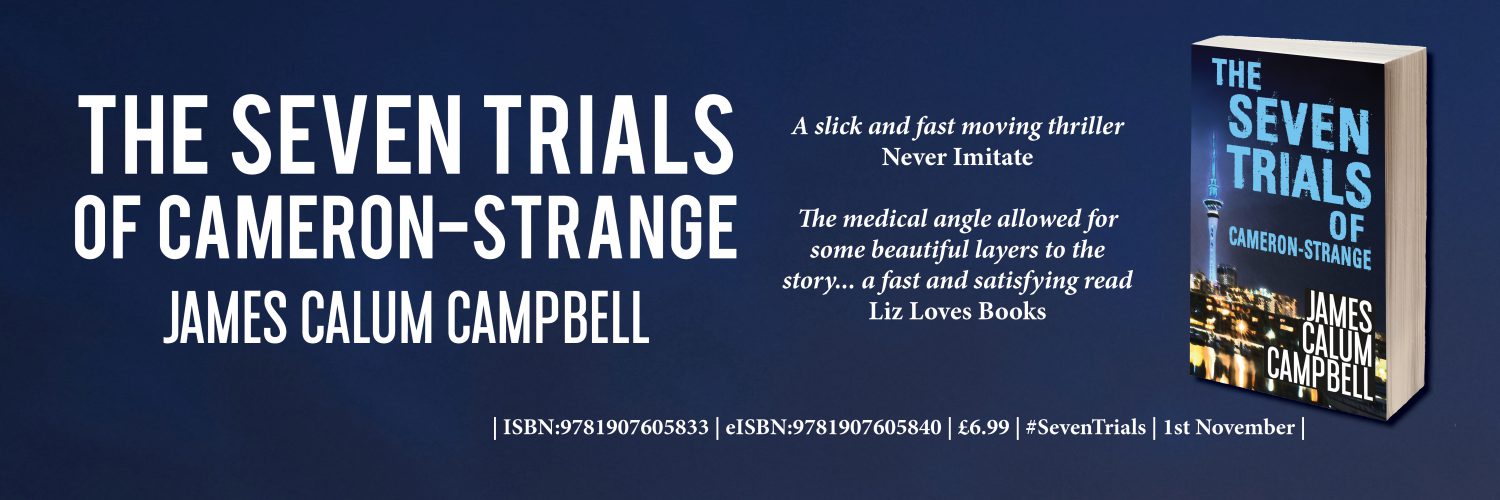

Have you ever been to a state banquet? I have; twice, after a fashion. When I was in New Zealand I was for a couple of years the National Medical Advisor to the Order of St John, which sounds very grand, but I was essentially advising the ambulance service on the training of first aiders. During my brief stint I edited the 2nd edition of the New Zealand First Aid Manual, the authorised training manual of the Order of St John. Anyway the appointment was at the behest of New Zealand’s then Governor General, Sir Michael Hardie Boys, and I guess that was why I ended up, twice, in Government House in Auckland, at a swanky do.
Well I say swanky, but I can tell you it was nothing like the nosh-up in Windsor Castle for President Trump’s unprecedented second state visit. Did you see that picture of the big long table, at which the great and the good on either side were separated by a huge floral arrangement of stunning opulence? It must have made conversation, other than with one’s immediate neighbours, impossible. By contrast, in Auckland we sat at circular tables each accommodating about a dozen people, and I was surprised on both occasions to find myself sharing a table with the G.G., and Lady Hardie Boys. They were very charming, and Sir Michael seemed genuinely interested in my work. I remember there were people present at these dinners, from all walks of life, and we all seemed to share a certain bewilderment that we had received the invitation at all.
Much later, after I’d returned to Scotland, the Westminster Government appointed a New Zealand high court judge, Dame Lowell Goddard QC, as independent chair of an inquiry into institutional child sex abuse. Allegedly, a paedophile ring operated within the City of Westminster. When she was asked how she would cope with the British Establishment, she expressed a similar sense of bewilderment to that I’d encountered in Auckland. New Zealand, she said, does not have an Establishment. I thought then of my visits to Government House, and found myself in agreement. New Zealand, or at least the Eotearoa of the end of last century, did not have an elite. That is not to say that there weren’t posh schools, wealthy people, a thriving private health sector, and so on. I even came across a few snobs. But what there wasn’t, was an elite group so crème de la crème that it was essentially sequestered away from the rest of common humanity. The gap between the rich and the poor, at least at the time, was relatively narrow. (Well I say that, but I’m not Maori, nor Polynesian.)
But if the state banquet at Windsor was anything at all, it was sequestered. It was conducted, in fact, entirely behind closed walls. Marine One touched down within Windsor Park. The President and the First Lady were met by the Prince and Princess of Wales. They proceeded through the park by horse and carriage, along a driveway lined by the military, but not by the public. No doubt the security concerns were compelling. But the President must have been more than satisfied with the resultant publicity shots. Such Pomp and Circumstance. Security would have remained top of the agenda throughout the ensuing banquet. Nobody, after having had a few drinks, was going to heckle the president. “I just want to set the record straight on a few things…” The entire shebang took place within a cocoon, and was choreographed right down to the last pas de deux. I thought the vast, groaning dinner table looked utterly absurd. It was the Mad Hatter’s Tea Party.
But I for one am relieved that the whole event went off without a glitch. I wouldn’t have minded so much a breach of etiquette, as a serious and violent incident. There wasn’t even a lapse of manners. No doubt the king was charming, and the president seemed to be on his best behaviour. The question has arisen, was the Prime Minister merely being sycophantic, or did he play a blinder? I’m inclined to think he did very well, up to a point. He was polite and courteous. He expressed differences of opinion, for example, concerning migration, global warming, and the Palestinian two-state solution, without recourse to disparagement or personal attack.
But I’m not at all convinced by the worthiness of the supposed economic prize. All these Hi Tech Moguls came across on Air Force One and promised investments in British AI worth billions. We will have once more and yet again the latest manifestation of the Dark Satanic Mills, huge factories consuming vast amounts of energy and cooled by oceanic amounts of water. What will they be doing? They will be trawling, or perhaps trolling, the internet, looking at absolutely everything, in order to discern a pattern. We absolutely must get ahead in the tech race. Bletchley Park gone mad. We are creating, have already created, the next Dystopia.
I will be eternally grateful for the thirteen years I spent in New Zealand. I believe I witnessed the possibility, indeed the reality, of a society based on egalitarian values, a sense of community, an acknowledgment of the responsibility to look out for one’s neighbour. That is not to say that bad things didn’t happen in New Zealand. Of course not. I saw them, at first hand, in the Emergency Department. But this was broadly before the age of the internet. Cell phones were in their infancy. There were no social media. People lived, and communed, in the real world. People didn’t post messages anonymously, going viral, to suggest, for example – I kid you not – that illegal immigrants be gassed. Who would have thought the road to Auschwitz-Birkenau was this short?
I’m intrigued that the Far Right has taken to trumpeting Christianity as one of its “core values”. In the wake of the tragic assassination of Charlie Kirk, even President Tump has, unusually, started to invoke the name of “God”. He has advised Sir Keir to bring the military on to the beaches, otherwise, the UK will be destroyed. I can only imagine that he has not considered deeply the meaning of Christ’s Parable of the Good Samaritan. This is a parable which turns our perception of reality on its head. We are used to the idea of ourselves, from a position of power, lending succour – or not – to the poor and needy. But the parable puts ourselves into the position of the person who has been attacked, robbed, and left for dead, and asks us to imagine that it is the despised outsider who comes to our aid. We thus are called upon to identify the outsider as our neighbour. I have a notion that now, somebody preaching such a doctrine would not get very far in today’s political climate. How would Jesus fare if were alive today?
I think he’d be crucified.
 jamescalumcampbell