Money Matters

Money was in the news a lot last week.  On Wednesday a bottle of whisky was sold at auction in Edinburgh for £848,000.  The Macallan Valerio Adami, 1926.  What on earth would you do with an £848,000 bottle of whisky?  Drink it?  Let’s see… what would be the cost of a dram?  I seem to recall that a “nip” is a fifth of a gill.  Can you remember what a gill is?  Hang on while I look it up…

Chambers – gill jil, n. a small measure, having various values; in recent times = ¼ pint. – gill’-house (obs.) a dram shop.  (O.Fr. gelle.)

How much booze in a bottle of whisky?  700 mls, I think.  How many nips in a bottle?  We need to know how many pints are in a litre.  Hang on while I Google it…

It says that 1 litre = 1.75975399 imperial pints.  So 700 mls contains 1.2318277 pints.  (You can tell I’m using a calculator.)  One fifth of a gill is a twentieth of a pint.  So a bottle of whisky holds 24.636554 nips.  Round this up to 25.  After all, a nip is such a parsimonious measure that I feel sure the barman would err on the side of profit.  This means that a nip of whisky will cost you £33,920.

I go through this rather laborious calculation to exemplify to you just how utterly bananas is the world of the super-rich.

Then a painting, “Girl with Balloon” by Banksy, went up for sale at auction and was sold at a price of £1.04 million.  Immediately after the gavel went down the painting self-destructed through a shredder.  The auctioneers said, “We’ve been Banksied.”  Just how much they, and the purchaser, were in on the stunt I don’t know, but I was intrigued to hear that one opinion noised abroad is that the shredded remains might turn out to be more valuable than the original.  As I said, how utterly bananas is the world of the super-rich?  It occurs to me that there’s a nice contrast between Banksy’s Girl with Balloon and Charles Rennie Mackintosh’s Glasgow School of Art.  One is constructed to be reduced deliberately to fragments.  The other is accidentally destroyed, to be lovingly restored (word on the street has it) fragment by fragment.  Not everybody is happy with that decision.  Shouldn’t we spend all that money on Glasgow’s deprived East End?  I wonder what Charles Rennie Mackintosh would have said?  I hazard a guess: raze the burned-out shell to the ground; then hold a competition for the design of a new building, and I’ll go in for it.

I listened, on Saturday evening, to a programme on Radio 4, largely centred round ex-Prime Minister Gordon Brown’s handling of the 2008 financial crash.    Well, the programme was full of drama. “We were running out of time.”  “The banks were running on empty.”  I was rather hoping to find out why all of a sudden, and out of the blue, the banks ran out of money.  I can’t say I’m any the wiser.  The crash seemed to be entirely a consequence of human folly.  It wasn’t as if some natural catastrophe had resulted in a widespread famine that left us all destitute and starving.

Then on Sunday, from my Zacchaeus vantage point at the back of Dunblane Cathedral, I heard a sermon preached on forgiveness, with a text drawn from the New Testament lesson – Matthew 18: 23 – 35, a parable concerning a servant who owes his master a vast amount of money.  He begs for time to repay it all, and his master takes pity on him and wipes the debt; whereupon the servant goes to a man who owes him a paltry sum, and casts him into prison.  Needless to say, when the master hears about it, he gets angry and gives his man short shrift.  This provides a context for the Lord’s Prayer’s “Forgive us our debts, as we forgive out debtors.”  I happened to be sharing a pew with a bank manager who whispered to me, “I wonder if forgiveness should be extended to the bankers.”  His own view was that nothing had been learned from the financial crash, and it might well all happen again.  Forgiveness is all well and good. What about atonement?

During his decade as Chancellor, Gordon Brown, a son of the manse, frequently talked up financial prudence.  Funnily enough, Our Lord didn’t seem that fussed.  In a rather erotically charged episode in John chapter 12, Martha’s sister Mary poured a generous supply of costly spikenard over his feet and wiped it in with her hair.  Didn’t Judas have a point when he said the nard should have been sold and the money given to the poor?  The author adds that this wasn’t what Judas had in mind at all – he wanted to hive off the cash into his own purse.  Just how the author figured that out I’m not quite sure.

On Sunday, the Cathedral held a fire drill.  I gave them top marks.  It took place at the close of the service, so that we were able to evacuate the building, and not return.  The session clerk explained exactly what would happen.  We would sing the closing hymn (Love divine, all loves excelling, to the tune Blaenwern), the minister would give the benediction, the choir would sing the amen, and the organist would lead the congregation in a repetition of the first verse of Love divine, during which the alarm would sound.  The elders would open all the cathedral doors, and we were instructed to evacuate expeditiously by the nearest exit.  It went like clockwork.  Inevitably I heard somebody say, “It’s health and safety gone mad!”  I have a notion that that very expression might have been used while the Titanic was being built and somebody suggested there should be sufficient life boats to accommodate all passengers and crew.  “It’s health and safety gone mad!  This ship is unsinkable.  Moving on to the arrangement of the deck chairs…”

The Director’s Cut

My dentist, a master craftsman, is adept at conducting a one-sided conversation.

“How’s the book going?”

“Mwuh.”

“It’s number three, isn’t it?”

“Zhja.”

“Nearly done?”

“Yumf.”

“How do you know when you are finished?”

“’Ischwhen’z’ajz goodajzitgetchz.”

I broke a tooth on Tuesday evening.  Upper right four.  I scared even myself by grinning in the mirror.  I thought, “I’ve got a book to complete.  I haven’t got time to fall to bits!”  I popped into my dentist the following afternoon and grimaced at the receptionist.  She booked me in for Thursday morning.  How good is that?  I’d anticipated that I might have to be gloomed for a lengthy reconstruction involving scaffolding and an enormous bill, but no!  I could be managed conservatively, there and then!  It probably won’t require any novocaine (remember that extraordinary scene in Three Billboards outside Ebbing, Missouri), but let me know if you are in discomfort.  It was a painless procedure, expeditious, and entirely successful.  I am full of admiration and gratitude.  And it was ludicrously inexpensive.  Something like £13.45.  I’d have thought that wouldn’t even cover the costs of materials.  An amusing (and slightly terrifying) episode took place back at reception.  The receptionist keyed the amount into the credit card reader, handed it over, and I rather too speedily keyed in my pin number.  The machine added the four digit number to the amount, and all of a sudden I had paid out a sum that would allow my dentist to retire.  Fortunately the transaction was cancelled.  I think.

But to return to matters of High Art, maybe I should have asked my dentist how he knows when he is finished.  I think he, like Mozart, could reasonably reply, “When I have achieved perfection.”  We mere mortals must settle for less.  I thought about his question afterwards and actually jotted down a list of possible answers.  Your task is done when:

  1. You have created a beginning, a middle, and an end, and you’ve joined them all up.
  2. You have trawled through the text and eradicated everything that makes you wince.
  3. You can’t think of a way of making it any better.
  4. Frankly, you’ve had enough.
  5. You realise that more is less.
  6. If you keep going it’s going to affect your mental health.
  7. You need to file a tax return, then take a holiday.

Undoubtedly the greatest revisionists are composers.  You can easily understand why this is so.  A piece of music doesn’t really exist except when it is being performed.  Therefore every performance is a new edition.  So composers are inclined to listen again, and then have second thoughts.  Thus Beethoven struggled to write an overture to his opera and came up with Leonora No. 1, No. 2, No. 3, and then went off at a complete tangent and wrote the overture to Fidelio.  Stravinsky fiddled with his Firebird – 1910, 1919, 1945…  Bruckner took the advice of friends and colleagues and tweaked his symphonies; maybe he should have stuck to his guns.  Rachmaninoff was famous for cuts; as a concert pianist he would cut his own compositions live in concert, extempore, if he sensed his audience growing restless.  Schubert did something unusual. He left the eighth symphony unfinished.  But perhaps this was because he realised that the Unfinished Symphony was, in fact, finished.

What about painters?  When do they stop?  I know very little about fine art, but I can imagine that a pitfall for the artist would be the temptation to keep touching something up until it becomes cluttered with redundant daubs.  I guess that could be applied to any creative process.  Perhaps the sculptor faces a slightly different challenge.  He strives to reveal the sculpture which already exists within the stone.  If he keeps going after the point at which he should have stopped, he ceases to be an artist and becomes a vandal.  Less is less.

Which brings us to writers.  Technology has made revision, practically, very easy.  You get your tome up on the computer screen and fiddle about with word choice, and order, to your heart’s content.  This is called word processing.  It’s a feature of the digital world but in reality it is not new.  Churchill, for example, was a great word processor.  He would compose a speech and then endlessly fiddle with it, pacing up and down, barking at his secretaries, searching for euphony.  He famously berated one of his typists for typing in single, rather than in double space.  He needed the space to make revisions in pen and ink.

Mind you, revision by word processor can be overdone.  All you are doing is tinkering.  “He lunged at me with a bloodcurdling yell.”   (Not my dentist; he is the gentlest of souls.)  “He came at me with an enraged scream.”  “He screamed at me with a bloodcurdling lunge…”  You’re just shifting deckchairs.

Yet on the whole, writers are happy to let go.  They cast their bread upon the waters and don’t look back.  I give them (us?) credit for that.  Let it go.  “Stet”, as the proof readers say.  So how, and when, do you decide that your baby is viable, and robust and fit enough to survive on her own?  You read through the text; you might even enjoy the content.  Then you come upon a passage that grates.  You squirm.  You strive to iron out all the glitches.  When do you stop?  Face it, you could go on for ever, in the relentless hunt to identify and exterminate cliché.  Eventually, you reach a point where everything hangs together, there are no lacunae in the elucidation of plot, and it all more or less makes sense.

Enough, already.

I’ll just run a quick spell check.

The Towpath

We were walking along the towpath of a canal on the outskirts of Edinburgh on Saturday morning, when the autumn equinox slipped past unobtrusively in the opposite direction.  A party of about thirty.  We had foregathered on this glorious morning to build up an appetite for lunch, which was a celebration of a Very Important Birthday of a friend of mine from medical school days.  Would I say a few words between courses?  It crossed my mind to read the assembly my friend’s blurb (which, as it happens, I wrote 37 years ago) from our class yearbook.

I was so grateful to my friend, et ux, for dragging me out of my garret into the sunshine.  Speedbird has just topped 100,000 words.  Page 399.  That is seriously wordy.  I must avoid the lure of loquacity with the sole purpose of turning on to page 400.  I am at the stage of final revision.  I read the tome and see how far I can get before some ghastly, graunching, clunking cliché of a literary artifice brings me up short and I think, “Well, that never happened!”

Our rendezvous on Saturday was an hour away so I gave my journey 90 minutes (+ 5 to set up the sat nav).  Remember the Cahoots doctrine (Campbell Adds Hours On Over The Schedule) which instructs you to work out your journey time and then add half as much again.  Consequently I arrived half an hour early.  I had coffee in a nearby hostelry and sat and contemplated the timeline of Speedbird.  It is contemporaneous (contemporanean… contemporary?).  A key event occurs on 8/9/18.  So I was able to reconstruct the entire novel in real time and put a date to every single episode.  Part 3 in the life of the troubled doc runs from April 25 through to October 1st – which, from the prospect of the equinox, is presumptuous.  I used my diary to give each chapter a specific day.  So, for example, on September 6th, my diary states “30 Euston Square… Climb Stac Pollaidh.”  Euston Square and Stac Pollaidh are about 650 miles apart, which implies a punishing schedule, but for the fact that Euston Square refers to me, and An Stac to ACS.  So Euston Square is real, and An Stac fantastical.  (Actually they are both fantastical: I refer you to my recent blog Caveat Emptor, but that’s another story.)  The distinction between that which is real and that which is imaginary is becoming blurred.  You can see that I am leading a Walter Mitty existence which is bordering on the delusional.

I might share some, but not all, of Speedbird’s precise dates with you, gentle reader.  I feel I ought to know more than I necessarily reveal.  In going through the book with a fine tooth comb I’m really copy-editing; Ms Hathaway cannot have blue eyes on page 385 when they were hazel on page 14.  It’s like a huge jigsaw puzzle.  As Mrs May and M. Barnier say, nothing is decided, until everything is decided (although we are beginning to suspect they will say, nothing is decided).

Anyway, after our stroll by the Union Canal, we repaired to a lovely old world hotel in Ratho and dined.  What a sweet occasion.  There were fine speeches, not least from the man himself, and one of considerable charm and wit from the older of his two wonderful daughters.  I got through mine more or less unscathed, but then all I had to do was read a text.

It was fun to look at the yearbook, and reminisce.  My friend was an academic high flier, and he chose to become a GP.  That sentence might have read: My friend was an academic high flier, but he chose to become a GP.  Medicine is going through a tough time at the moment, but it will survive and prosper so long as it chooses “and” over “but”.  The essence of my friend’s work, and his life, as his daughter pointed out, is kindliness.  He is a Fellow of the Royal College of General Practice.  The motto of the RCGP is “Cum Scientia, Caritas.”  His daughter, a classicist, will translate.

These were the days!

When the bell went I took a chance and ran up the alley on the south side of the school which was strictly out-of-bounds but I wasn’t seen and I missed the mobs on Clarence Drive and picked up a 59 bus on Hyndland Road and went to Arlington Baths.  They occupied a magnificent but decrepit Byzantine folly, with domes and minarets at the foot of a run-down street in Woodside.  In the Turkish baths, ancient bank managers with huge bellies and diminutive genitalia padded around the finely tiled mosaics.  Arlington was really a remnant of Empire, originally a bathing club for gentlemen and the sons of gentlemen.  I remember an ancient poster advertising the club (it could as easily have been an advert for Woodbine, or Bovril) featuring muscular moustachioed Victorian gentlemen zooming over the surface of the pool on rings and trapeze.  I was not the son of a gentleman; my father was a policeman and my mother a nurse, but we were upwardly mobile.  I threw my school bag on to the great pile of bags that littered the foot of the stairway up to the billiard rooms, grabbed my trunks from their hook in the office, jotted my membership number, 301J, in the book, changed, and went on the trapeze.  There were two trapezes in series, just as in a circus.  The pool was the safety net.  The manoeuvre of transferring between trapezes was known as “the fly”.  I had not yet mastered the fly, but I was getting close.

I played tig with some kids from Hillhead and the High School, and ran and dived and swam myself to exhaustion eventually getting thrown out because I jumped from the deep end trapeze stand to the third ring and swung like Tarzan the length of the pool which was verboten.  Mr Cox blew his whistle and kicked me out.  My eyes were stinging with chlorine and my palms callused with the repeated gripping of the rings and trapeze.  All the lights had haloes round them.

After baths I met my father in the reading room.  He was talking with his friend Mr Train.  Mr Train was a haberdasher and women’s couturier who was very tall with fair hair and a trimmed moustache.  He looked like Douglas Fairbanks Jnr.  He was immaculately dressed in sports jacket, cavalry twills with a razor-sharp crease, and faultlessly polished brown shoes.  He used to say to my father, “James, invest in your clothes.”  He always wanted my mother to model for him but she never did.

My father had been in the RAF and Mr Train had been a POW in Stalag Luft III.  He didn’t have a good word for Tuck, Bushell, Bader and the rest who kept irritating the Germans, who would take it out on everybody by exacting reprisals mostly of a petty nature which would increase the general level of discomfort.  He greeted me with a twinkle in his eye.  “Hello young man!  Can you do the fly yet?”

“No.”

“I was watching you.  You’re nearly there!”

We gave Mr Train a lift along Great Western Road to Kelvindale.  It had been drizzling and on the broad curve of Clevedon Road the rear end of the car drifted.  My father drove into the skid and the car righted itself.

“Well held, James!”

Next day I sat in the playground at morning break with my pal Big Jobs.  He had torn out the middle four pages of his F2 jotter and was writing laboriously.  I glanced over his shoulder.

Discipline is the fundamental basis of any well-organized society.   

Discipline is the fundamental basis of any well-organized society.

Discipline is the fundamental basis of any well-organized society.

Discipline is the basis of any well-organized society.

Discipline…

I asked sympathetically, “How many?”

“Hundred.  96 to go.”

“Blimey.  Who was it?”

“Gobstopper.”

The vice-captain. He was the only prefect sufficiently feared and hated to merit a nickname.  He was squat and prematurely bald and sadistic and aggressive and frankly looked ridiculous in his school tie and half-colours.  He looked like a real estate agent.  Shortly afterwards he became one.  He would hand out lines as soon as look at you.  At least he wasn’t allowed to beat us.  That had gone out shortly before the abolition of hanging.  Some people thought society was going to the dogs.  We were all getting soft.  I asked Big Jobs what he had been caught at.

“Having a ciggy in the bogs.”

Well now that’s ridiculous.  Everybody knew Big Jobs smoked.  Big Jobs had been smoking since he was about 5.  He smoked on Clarence Drive to and from school and none of the teachers bothered.  He was like one of these Hispanic boys in the Remove at Public School – you read about them in The Hotspur – who was allowed to smoke Cuban cigars for cultural reasons.  Big Jobs really ought to have had the same dispensation.  I volunteered, “Gimme some paper and I’ll do a page for you.”

“He’ll recognise the handwriting.”

“No he won’t.  I’m a good forger.  Let’s see…”  I copied Big Jobs’ backward slanting scrawl and handed it over for his perusal.

“Not bad.  Okay, thanks.”

And as I wrote, I wondered if it were true.  Was discipline really the fundamental basis?  I didn’t care for the idea.  If it were fundamental, then discipline existed for its own sake.  But surely we chose discipline, we chose to be self-disciplined, in order to achieve a higher aim.  If the sole purpose of our society was the perpetuity of discipline, then were we not merely the rank and file of a vast goose-stepping army strutting around some parade ground just for strutting’s sake?  Who would benefit from such an arrangement?

The Politburo watching the show, I suppose.  That was a very uncomfortable notion.  Suppose the only thing that society asked of us was that we strut in a specific way.  We strut in the playground so as not to arouse Gobstopper’s wrath. We strut, albeit with more subtle gait, in the classroom for our teachers, subsequently in the work place for our employers.  But if there is nothing behind the strut, then this is a masque of death.  And what happens if you find yourself out of step?  Well, Gobstopper hands down 100 lines.  He might well have dictated, “Harshness is the fundamental basis of any well-organized society.”

Harshness is the fundamental basis of any well-organized society…

Big Jobs glanced across.  “Steady mate, you’re writing the wrong thing.”

“Sorry.”

I’m sure Big Jobs would have settled for two of the belt.  I know I would have.  Short and sharp.  A double dose of the tawse; two swipes of the Lochgelly.  Over and done with.  Lines were soul-destroying.  You did them, all the while thinking, “This is a complete and utter waste of time.”  That was the point, the poignancy of the punishment.  It was like painting coal.  It struck me that I hadn’t had the belt for a while.  I got a reprieve in MacTavish’s one day.  I’d been fooling around, and MacTavish said in an undertone, “If you don’t settle down, I’ll warm your fingers.”  I mistook his tone.  I should have recognised the menace of understatement.

“Okay, that’s it.  Step out.”  The desk drawer was wrenched open and slammed shut.  He swished the fork-tongued instrument of discipline through the air like a golfer warming up with a driver at the tee.

“Cross them.”

I did as I was told.

He raised his right arm.  The tawse disappeared momentarily behind his shoulder.  I tensed in readiness.

Suddenly MacTavish went pale.

“Good God, boy, what have you done to your hands?”

“Mm?”  I glanced at them.  The palms were covered in blisters and calluses from the repeated frictional trauma of the rings and trapeze at Arlington.

MacTavish relaxed his stance and put the belt back in his drawer.

“Sit down and hold your tongue.”

It never occurred to us that our teachers’ right to chastise us might be withdrawn.  But even then there was a debate raging amongst the directors in 129 Bath Street.  All these kids from deprived backgrounds suffering abuse at home – did they really need another clip round the ear?  “Never did us any harm!” said the pro-tawse lobby, with their irrepressible facial tics, intermittently losing control of their bladder.

We were changing for gym one day, and a bit noisy, and Paddy Elder came round from the PE staff room and said, “I’ll say this once.  Shut up.”

There was a lull, but the hubbub started up again.  Somebody pushed my friend Donald against the dressing room door and it slammed into the wall with a crash.  Paddy marched back in and summarily gave Donald six of the best.

There was dead silence.

Then my friend Brian MacFarlane met my gaze and shook his head and whispered, “That’s not right.”


Caveat Emptor

A couple of months ago, minded to attend a BBC Proms performance of the Britten War Requiem on September 6th, I went on line and bought a ticket.  Or thought I did.

This was the last time Peter Oundjian conducted the Royal Scottish National Orchestra as their Musical Director.  He closed the RSNO 2017-18 season on June 2nd in Glasgow with a performance of Mahler 9.  On that occasion, the (also outgoing) orchestra’s chief executive encouraged the audience to make the trip to London.  If you have trouble getting a ticket, he said, let me know.

I Googled “BBC Proms” and rather carelessly visited the first listed website.  To make my trip worthwhile, I also purchased a ticket for the all-Berlioz Prom of September 5th, featuring the viola player Antoine Tamestit, and the stupendous mezzo Joyce DiDonato.  I organized to stay two nights with the Royal College of General Practice, and one night with the Royal Society of Medicine.  I bought an airline ticket and a rail connection from Stansted.

I was slightly puzzled that my Berlioz ticket was going to be sent to be my Royal Mail, while my Britten ticket was electronic.  I printed out the Britten ticket.  It was not the seat I had booked.  The printout was for a cheaper seat in another part of the hall, and it bore somebody else’s name.  I got on the chat line naively assuming that this could be sorted out.  Apparently my only options were to use the ticket, or attempt to sell it on.  I got into a somewhat protracted chat-room conversation which ended up in a loop going nowhere.

I phoned the Royal Albert Hall Box Office.  They asked me what website I visited.  I told them.  They said, “Oh God, that lot.”  This was not encouraging.  I also remembered the RSNO Chief Executive’s kind offer, and contacted his office.  They were very sympathetic, but didn’t have any tickets.  I resolved to start again, and contacted the Royal Albert Hall Box Office to buy a ticket.  During the transaction, my Kensington Gore interlocutor suddenly said, “It’s a practice fire alarm.  Got to go.”  It was at this point that I decided I wasn’t meant to travel to London.

My dear colleagues in the RCGP and the RSM were very good.  I got a full refund bar a £5 administrative fee.  I did try and get my air fare refunded, but in fairness to the budget airline, they did say up front that refunds in event of cancellation would not be possible.  So the entire exercise cost me £127.02.  I didn’t make any further attempt to contact the ticketing people.  I didn’t want anything more to do with them.  I resolved to put the whole thing down to experience and not worry about it.  I received several e-fanfares, announcing the imminent arrival of my (snail mail) ticket for the Berlioz.  Not that it mattered any more, but it never arrived.  Today I got a questionnaire from the budget airline asking me how I enjoyed my trip.  Endless compulsory fields on a scale of one to ten.  I found a box for free text and wrote, “I never made this journey”, and pressed “submit”.  Of course it was inadmissible.  So I pressed “delete”.

The great cellist Yo-Yo Ma was on the Andrew Marr show this morning, returning after the summer break.  What an engaging and kindly smile he has.  He played the Prelude from Bach’s first cello suite.  Yo-Yo Ma has played to a host of American presidents in the White House.  Mr Marr asked him if it was stressful to perform to the great and the good.  He replied that he was stressed when his performance failed to make a connection.  He was convinced of the power of music as a source of good for humanity.  He used to think that, in terms of human transactions, music should have a seat at the table.  Now he thinks that music is the table.  Music is trust.

So I will carry on listening.  I’ve been working very hard trying to finish a book.  I’m a dull dog and I’m very grateful to a passing New Zealander who dragged me out of myself and asked to be entertained.  I took her to two organ recitals, on in Dundee’s Caird Hall, and one in the Glasgow Art Galleries.  I really know how to show a girl a good time.

“Speedbird”, Redux

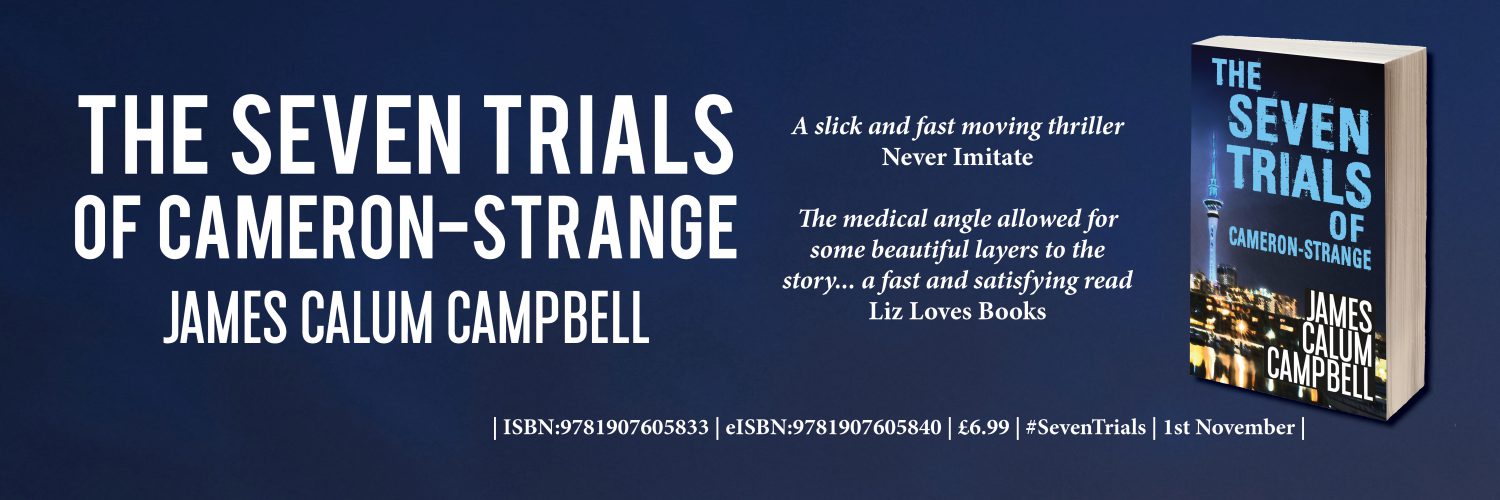
Last year I wrote a novel entitled Speedbird.  Speedbird is Part 3 in the troubled life of Dr Alastair Cameron-Strange.  I sent the draft to my publisher, who pointed out some structural problems that needed to be addressed.  This was indeed the case, but at the time I wasn’t really in the mood to address them.  (I hope I wasn’t becoming a Diva, a Prima Donna, but you never know.)  Anyway we agreed to put the book down, like a vintage wine, and let it do whatever vintage wines do while occupying the cellar.  Of course the simile is not really a propos.  Vintage wines might mature, or they might degrade, with time.  Written words, on the other hand, will do nothing at all, no matter how much time you give them.  The words in storage remain exactly the same.  The only thing that will change with time is the author.  He may resurrect the incarcerated tome and find it is exactly as it was when abandoned.  If it appears changed, it is only because it is being viewed with fresh eyes.

So I forgot about Speedbird.  Then my gentle publisher emailed me and asked after the well-being of Alastair Cameron-Strange.  It was the nudge I needed.  I brought the tome up out of the cellar, blew away the dust, and perused it once more.  I perceived a change.  Whether the change resides in the book or in the author hardly seems to matter.  I was able once more to take up the threads and weave the tapestry.  I became engaged, then distracted, then preoccupied, and now – mildly I trust – obsessed.  I confess I rather like Speedbird.  It is taking shape. Weird shape, but shape.  Its forging has come at a cost.  ACS’ world is growing darker.  Nothing I can do about it.

A pretentious conceit, I hear you say.  You are the author; you can do with your creation whatever you like.  And that is perfectly true.  And yet the more I proceed with this tale, the more I am constrained by a sense of what plot machinations will “work” – or not work, as the case may be.  I can only proceed where I am led.  So I sit daily in front of my word processor and grope my way forward into the dark.

Structurally, the tome is in much better shape than it was.  It is in three acts – a format universally favoured by the film industry though I have to say that that consideration mattered to me not one whit.  Each act occurs in a separate location, and takes place over eight chapters.  24 chapters then.  And then a coda, revisiting each location once, over a further 3 chapters.  So, 27 chapters, “bookended” (as they say) by a correspondence, two letters, to open and to close.  There it is.

Today was my birthday.  I gave myself a day off.  After all, Sunday is a day of rest.  I attended Dunblane Cathedral, then was shouted lunch in Callander, then had a delightful walk in the environs of Kings Park Stirling, then had a private recital from a virtuoso pianist, all the while bombarded by a barrage of congratulatory texts that made me feel like a teenager.  Tomorrow, I entertain an old friend from New Zealand.

But come Tuesday (if spared), it’s back to the coal face.  I have a sense of being within shouting distance (within co-wee, as we say in New Zealand) of the conclusion.

Onward and upward.

Six Concerts

Over the last fortnight I’ve attended six concerts in the Usher Hall as part of the Edinburgh Festival.

On August 14th, the National Youth Orchestra of Canada played Estacio’s Moontides (UK premiere), Copland’s Appalachian Spring, and Vaughan Williams’ Pastoral Symphony.  Wonderful.  What a relief that experiencing a contemporary work should not be like a dental extraction.  The Estacio was harmonic and evocative, in a North American idiom not unlike that of the Copland.  And if RVW 3 is redolent of pastoral England, perhaps it is an England as remembered by an ambulance driver in the Royal Medical Corps, in Flanders.  Hearing RVW in concert is a profoundly spiritual experience, made even more haunting by the effect of the offstage bugle and wordless mezzo-soprano.  Then the NYOC stunned everybody not by playing two encores, but by singing them.  And what an excellent SATB choir they turned out to be.  They sang a cappella – the only sound other than the human voice was the combined percussive thunder of a more than a hundred feet stamping on the stage and more than a hundred right hands slapping the ribcage, in a stirring Québécois anthem.  They thoroughly deserved the unreserved whoops of the man on my right, who happened admittedly to be from Toronto, and on the orchestra’s teaching staff.

On August 16th, the Oslo Philharmonic Orchestra under Vasily Petrenko played Strauss’ Don Juan, then to be joined by soprano Lise Davidsen to sing Strauss’s Vier Lieder Opus 27, and Wiegenlied, Op 41 No 1.  Ms Davidsen was a statuesque figure of some presence, whose huge voice had no difficulty in filling the Usher Hall even above the orchestral tutti, with great beauty and no strain.  She never sang louder than lovely.  She sang two encores – I know not what – the first a gypsy song and the second a ballad not unlike Shenandoah.  Prior to each encore she and Maestro Petrenko had a brief tête-à-tête, and on the second occasion the conductor asked the audience in mime if they wished to hear more.  There was an amusing piece of faux-Diva dumb crambo when Ms Davidsen raised an ironic eyebrow.

Then the orchestra played Prokofiev 6.  There is a sustained and very haunting melody for oboe which occurs in its first movement, and then recurs towards the end of the symphony.  It is very affecting.  As with so much Soviet music, all is not as it appears.  There is a tragic irony in that Prokofiev should have died in 1953, on the very same day as Stalin.

The following day, the City of Birmingham Symphony Orchestra played Stravinsky’s Funeral Song, Opus 5, Elgar’s Cello Concerto, and Ravel’s Daphnis et Chloé.  This was not quite as billed, because (I understand), the CBSO’s charismatic conductor Mirga Gražinytė-Tyla is with child. So Ludovic Morlot stood in, and the cellist was the young BBC musician of the year (2016) Sheku Kanneh-Mason.  The Stravinsky is a recently rediscovered early work and you can hear anticipations therein of the great ballet scores, especially the Firebird.  In the Elgar, Sheku Kanneh-Mason was magnificent.  What a musical gift he has.  His was an intimate rendition, not at all reminiscent of the great Jacqueline du Pré, but entirely his own.  It was a privilege to hear him play.  The Edinburgh Festival Chorus joined the CBSO for the Ravel.  Their wordless contribution was powerful and sonorous.

On August 20th the Colburn Orchestra (a music college in LA) played Esa-Pekka Salonen’s Nyx, the Barber Violin Concerto (soloist Simone Porter) and the Rachmaninov Symphonic Dances.  Another wonderful orchestra.  They were conducted by Stéphane Denѐve.  Denѐve conducted the RSNO between 2005 and 2012 and he got a very warm welcome back from the audience.  He was delighted to be back in the Usher Hall.  “Good evening… bon soir!  Ah!”

Then on August 23rd came the final of the Eurovision Young Musicians 2018 (as opposed to the Eurovision Song Contest – though anchor-man Petroc Trelawny was amused to point out that the latter had in fact been held in the Usher in 1972, the winner on that occasion being Luxembourg.  This concert was televised here and across Europe so there was quite an air of excitement in the hall.  There were six finalists, a cellist, two violinists, a bassist, saxophonist, and a pianist, each given a twelve minute slot.  All were amazing.  In terms of virtuosity and solidity of technique, perhaps the pianist and one of the violinists had an edge, but I was most taken by the bass player, a young man from the Czech Republic who came out wearing a kilt (he got a tremendous ovation) and proceeded to play his own composition.  It sounded to me a little like Dvořák.  I thought he had something.  He spoke to people.  The pianist, a Russian with a phenomenal technique, won.

And on August 24th the Baltimore Symphony under Marin Alsop played the Stravinsky Firebird Suite (1919), the Gershwin Concerto in F (soloist Jean-Yves Thibaudet), and Schumann 2.  What a Rolls Royce Orchestra.    

About an hour before the concert’s start, I happened to be just outside the door of the Sheraton Hotel across the road from the Usher, waiting for the rain to go off, and who should also be waiting next to me, but Marin Alsop.  I said to her, “You’ve got a concert to conduct.  At least I know I won’t be late.”  She was very charming.  Since she had been on the judging panel for Eurovision on the previous night, I couldn’t help but opine that the bassist should have won.  Everyone’s a critic.  But at the end of the day, I remarked, music is not a competition.  Fancy telling one of the great conductors of the world what music is, or is not.  I really ought to get a grip.

There’s No Smoke without a Smoke Machine

There is a character in Orwell’s 1984, Syme, who is arrested by the Thought Police and who disappears.  His disappearance is complete – he does not merely cease to exist, but his entire history is erased; he has never existed.

It was, ironically, in 1984 that I briefly, and literally, ran into somebody who was to become a non-person.  I was running in the Glasgow marathon and, around the 10k mark, I recall we ran up Queen Margaret Drive in Glasgow’s west end, ironically again, (with hindsight), past the BBC.  For a few minutes I passed the time of day with a robust-looking middle-aged man of middle height.  He wore a running vest and running shoes of gaudy colours and shorts so lurid as to be incandescent.  I remember he seemed to be surrounded by a protective entourage.  I have no doubt he was running for a good cause, perhaps for many.  He was affable and chatty.  I think we mostly discussed the weather.

Jimmy Saville.

Now of course, like Syme, Saville is a non-person.  He never existed.  Imagine all the archived footage of Top of the Pops and Jim’ll Fix It that can never be shown.  This is what happens when you blot your copybook.  You get written out.  When people started making allegations against Kevin Spacey he was airbrushed out of a film he’d just made and his role was handed to Christopher Plummer.  Spacey as director of the Old Vic had a huge profile in the UK but he has vanished completely.

So I quite see why Sir Cliff Richard got so exercised about the way the BBC covered the story of the allegations made against him.  They used a helicopter to film a police swoop on his Berkshire home, while he was abroad.  As it turned out, he had no case to answer.  Had it gone the other way, he would have been finished, not merely in the sense that he could never have performed again, but in that his entire life’s work would have been “disappeared”.

When the court found in favour of Sir Cliff, the BBC indicated they were considering an appeal.  The case revolved round issues of the freedom of the press to report issues of public interest versus the right of the individual to privacy.  We are familiar with these issues because of the efforts of tabloid newspapers to infiltrate the lives of celebrities through phone-hacking.  The actor Hugh Grant is a prominent, and very eloquent spokesman for Hacked Off.  The use of covert means by the tabloid press to investigate the death of the teenager Milly Dowler became a focal point for a cause célѐbre, leading to the Leveson Inquiry and an attempt to regulate the activities of the press, which thus far has made little headway.

With respect to Sir Cliff, the opinion of the court was that the televised coverage had been over the top, and that the BBC had been seduced by the lure of the scoop rather than by any high minded devotion toward the public good.  The BBC has decided not to appeal.  I suspect this is a pragmatic and calculated decision, not just in the sense that the corporation might lose the appeal, but in that public sympathy will be on the side of an exonerated Sir Cliff.  I think it less likely that the BBC would back down quite simply because they are persuaded that they got it wrong.

The allegation of historic crimes of sexual abuse levelled against the late Sir Edward Heath raised parallel issues.  I recall hearing a very remarkable interview on the BBC with Sir Richard Henriques, a retired high court judge who was particularly perturbed that the police should dub complainants as “victims” before a case was proven.  The police counterargument was that the conferring of victimhood status, and indeed the publicity afforded to police investigations of prominent individuals prior to any charges being brought, would encourage other “victims” to come forward.  But might a modus operandi that amounts to collusion between police and press not also encourage fantasists to come forward?  The counterargument, that fantasy is extremely unusual and that people making allegations of historic abuse really ought to be believed, is surely in itself fantastic.   We may see this position as a swing of the pendulum from one extreme to another.  After all, we may ask of Saville, how on earth did he get away with it?  He seemed to have been immune to criticism, a man with powerful allies, protected by his own celebrity.  Understandably, the police now wish to be seen to be willing and able to investigate anybody, without fear or favour.  Yet Sir Richard Henriques’ point seems to me to be well made.  If a defendant remains innocent until proven guilty, then it follows that the testimony of the complainant must be held in doubt until it is proved to be true, itself beyond reasonable doubt.

We live in an incredibly pharisaic age, an age of virtue signalling and finger-pointing.  Anybody who writes about political issues, and contemporary society, has the sensation of walking on egg shells each time he addresses issues of race, gender, sex and sexuality.  You sometimes see a writer being hauled over the coals for expressing a view which just happens to be anathema to the zeitgeist.  Then he has that look about him of a rabbit caught in the headlights of a car that is about to run him down.

Was the biblical King David a monster?  I suppose he was.  He lusted after Bathsheba, when he caught sight of her bathing.  (Who among us hasn’t done that?)  So he had sex with her, and she got pregnant.  He organised for her husband, Uriah the Hittite (who was under military command and supposed to be celibate) to go home to her, so to cover up what he’d done, but Uriah stuck to his creed.  So David sent him into battle, and to the most dangerous sector of the front line, essentially in order to murder him.  In all this, he succeeded.  Then Nathan the prophet came along and told David an allegory about a powerful person who took terrible advantage of a poor person.  “You are that man.”

Yet still we sing the Psalms of David.

(A sobering thought: nobody under the age of about 50 will have any idea what I’m talking about.)

G.K. Chesterton was once asked what he thought was the biggest problem in the world today, and he replied. “Me.”  I think I know what he meant.  I feel like saying, “No G.K., not you, it’s me.”  Let he who is without sin cast the first stone.


Thirty-nine Steps, I Counted Them

On the hottest day of this remarkably hot summer, I chanced to be in Peebles, and stepped out of the seething cauldron of Peebles High Street into the cool tranquillity of the John Buchan Museum.  Well worth a visit.  Compared with Abbotsford, the grandiose pile of Buchan’s great literary hero Sir Walter Scott, this is a modest collection of memorabilia that would easily fit into a crofter’s cottage, yet I found the exhibits endlessly fascinating, particularly those pertaining to Buchan’s work in Intelligence during the First World War.

I’ve been an avid fan of Buchan ever since one memorable Friday afternoon in Primary VII, when Mrs Miller opened at page 1 of The Thirty-Nine Steps and started to read to us:

I returned from the City about three o’clock on that May afternoon pretty well disgusted with life.  I had been three months in the Old Country, and was fed up with it…

The British weather makes Richard Hannay liverish, and he has more or less decided to go back to the Cape.  But he gives the Old Country one more day.  And what happens?  Well, Scudder turns up at his door, and he’s off on the first of five adventures.  I gobbled them all up.  They are marvellous.

Intrigued by the pattern of Buchan’s life, while in the John Buchan Museum I bought John Buchan, A Biography, by Janet Adam Smith (Rupert Hart-Davis, 1965).  It is a splendid book which offers comprehensive coverage of the writer’s life and works, and paints a picture of a man of warmth and integrity.  You can’t help but be overawed by the scope and breadth of his endeavours.  Buchan’s CV is remarkable.  Born in Perth in 1875, a son of the manse, he attended Glasgow University, and subsequently Brasenose College in Oxford.  He read classics, or “Greats”.  He started to write and to publish while he was an undergraduate, and it appeared that the literary life beckoned him, yet he seemed to make a decision early on that writing, albeit that he might be prolific, would not be his main preoccupation. After Oxford he went out to South Africa as an administrator, one of “Milner’s men”, or “the kindergarten” as they were called because they were all so young.  When he came home, he went into publishing.  Then the Great War came, and he ended up running the Ministry of Information.  Later, he was to be deputy director of Reuter’s, then MP for the Scottish Universities.  He married Susan Grosvenor and started a family.  And all the time, he wrote.  Essays, newspaper articles, novels, history, biography.

But he was to avow that politics was his abiding passion.  Nevertheless he lacked the partisanship he might have needed, steadfastly to pursue the career of a professional politician.  He was always “above the battle”.  He wanted to enter public life but he was bored with party squabbling.  He was never given a cabinet appointment.  In 1935 he was created 1st Baron Tweedsmuir and he became Governor-General of Canada.  All the time, he was plagued with ill health.  He gave his character John Scantlebury Blenkiron a duodenal ulcer and this is likely to be what he himself suffered from.   He was never really free of it.  That is perplexing, because had he been alive today he might well have been cured by a week’s course of antibiotics.

In Canada, despite his poor health, he travelled widely, visiting the ordinary inhabitants of the remote regions of the north.  His last novel, Sick Heart River, describes the last adventure of the lawyer Sir Edward Leithen, the recurring character who first appeared in The Power House, and who most resembled Buchan himself.  He too travels to the Canadian outback despite being terminally ill.  Buchan suffered a cerebral haemorrhage and died in Montreal on February 11th, 1940.  His autobiography, Memory Hold-the-Door (published in the US as Pilgrim’s Way and a favourite of JFK) was published in 1940.


Buchan remains steadfastly in print.  Doubtless he would have wished to be remembered for his biographies of Scott and Cromwell and Montrose, but it is really Richard Hannay who made Buchan world famous, just as James Bond made Ian Fleming world famous forty years later.  Yet for Buchan himself, the Hannay books appear only to have been a diversion.  He called them “shockers” – his word for thrillers.  He had read widely in the genre, and he made up his mind that he could make a far better fist of it.  So that’s what he did, while pursuing several careers outwith the cloistered world of letters.  A remarkable feature of Buchan’s life is the ease with which he appeared to move between social strata.  He seemed equally at ease with the King, and Stanley Baldwin, as with Ramsay MacDonald and indeed with the Red Clydesiders whom he depicted in Mr Standfast in the character of Andrew Amos.  He also forged a close relationship with President Roosevelt whom he saw as the only world figure big enough to avert the impending catastrophe in Europe in the late 1930s.  He worked with Roosevelt, preparing a memorandum for the President, in an attempt to bring about a conference of world leaders.  But Mr Chamberlain dismissed the idea without even bothering to tell his cabinet about it.  Instead he went off to Berchtesgaden, confident that he could manage the Fuhrer perfectly well himself.

Of course, the Hannay books are dated; they are of their time.  In Peebles, I picked up an ancient edition of Mr Standfast, opened it at random, and read Richard Hannay’s appalling utterance:

And to my joy, one night there was a great buck n***** who had a lot to say about “Africa for the Africans.”  I had a few words with him in Sesutu afterwards, and rather spoiled his visit. 

(The asterisks are mine.)

Curious to know how modern editions of Buchan deal with unacceptable language, I popped into Waterstones and consulted the Richard Hannay Omnibus published by Wordsworth Classics in 2010.  The “great buck n*****” is replaced by “big black man”.  In other words, the books have been censored.  A poor editorial decision?  I can hardly reprimand Wordsworth Classics when, after all, I’ve just censored myself with all these asterisks.

I venture to say that Buchan is not Hannay.  Hannay is a creation.  He is a man of action, a Big Bruiser underestimated by his adversaries, because they fail to notice the rich seam of imagination and creativity in his consciousness.  That much he shares with his creator.  Hitchcock, who made The Thirty-Nine Steps famous through film, recognised the originality of the atmosphere of Hannay’s world, the world, indeed, of “atmosphere”, the Double Bluff, the thinness of the veneer of civilisation.  “Capering women and monkey-faced men”, and “A general loosening of screws”.  Men in ulsters emerge from shooting brakes in country estates, and you sense a world of conspiracy, a civilisation far more fragile than it appears, and a world teetering on the brink.

Further Sweepings from the Cutting-room Floor

“Horlicks?”

“Could I possibly have it with a correctif?”

MacKenzie asked, “What’s that?”

“Fortification.  If it’s brandy I call it a d’Artagnan, if it’s single malt, a Snape.”

“Why Snape?”

“Think Aldeburgh.  The Maltings at Snape.”

“You’re off you head.”  But she found some Oban and added a measure.  I took a sip.

“Perhaps a tad more.”

She frowned.  “Are you getting fond of the glug-glug?”

“Not inordinately.”

“How many units are you taking?”

“Say fourteen.”

“A week?”

“Good heavens no, dear sister.  A day.”

“You’re joking.”

“It’s not as much as it sounds.  Couple of G & Ts at the cocktail hour.  Substantial gentleman’s measures.  Say 3 units each.  Wine with dinner.  Not the whole bottle.  Say two thirds.  Call that another six.  Then a large single malt for a nightcap.  That’s another two.  Yep, comes to fourteen.”

Her eyes opened in horror.  ”But that’s appalling!  That’s a hundred units a week!”

“If you add in a Snape and a d’Artagnan, just to round up, yes I suppose it is.”

She shook her head.  “Slippery slope, Alastair.”

And she was right.  I may have been exaggerating.  But it was only too easy to deceive oneself into thinking one had it under control.  The grog was like any other instrument of the devil.  It would quietly insinuate its way into your life and then, without appearing to dominate, it would push every other aspect of life into subservience.  Work, play, hobbies, interests, pursuits, people, Grand Passions, Great Causes, Faith, Hope, and ultimately Love, all would take a back seat to the deoch.  The whole timetable of your life would be scheduled round the next drink.  The cocktail hour would arrive earlier in the day.  It’s always five o’clock in the evening somewhere in the world.  The prospect of an evening of sobriety would fill one with gloom, anxiety, even foreboding.

Of course you wouldn’t be able to keep it secret.  Twenty years down the track, while MacKenzie and spouse, Mr and Mrs Perfect, were being philanthropically profligate at Carnegie Hall, the final Mrs Cameron-Strange would come to realise I was a lost cause, and get out.  The kids, who had spent two decades tortured by the dread and embarrassment at how they might find me in social situations, trying to cut me off at the pass on my way to the bar, trying to keep their friends out of my bleary-eyed way, would similarly desert me.

Then there would be the health issues.  The stigmata of the drinker – liver palms, spider naevi, jaundice.  The early morning awakening in low mood, the crushing sense of self-pity, the hangovers, the black outs, the memory impairment, the shakes.  Maybe even the DTs.  It could get a whole lot worse.  Liver failure.  Hepatic encephalopathy.  A whole host of cancers.  The screaming ab-dabs.

Well before then, my work would have begun to suffer.  Maybe my colleagues, out of a misplaced sense of kindliness and loyalty, would have propped me up and protected me, as well as my patients, with an elaborate roster of checks and double-checks.  Finally it would all become too much and they would have to let me go.  There would be a blunder.  A Bad Mistake.  Then an unfortunate encounter with the constabulary one night in the car.  The GMC would have to be informed.  With due regard for my record of service they would do their damnedest not to strike me off.  But I’d have the humiliation of attending a detoxification and education programme.  I’d be earmarked as an addict.  An impaired professional.  My work would have to be supervised.  I might be credentialed only to perform a certain number of tasks. Nurses would give me sidelong glances.  There goes old ACS.  They say he was quite a good doctor in his day.  Not bad looking either, believe it or not.  To the medical students I would be invisible.  What a nightmare.

No.  MacKenzie was right.  Don’t go down that route.

How would you get yourself out of such a hole?  How, in fact, do you cure yourself of an addiction?  Not alone, that’s for sure.  But with help.  Probably best to join AA.  No mawkish sentimentality there.  They would tell it to you straight.  You wouldn’t be able to pull the wool over their eyes.  “I’m more habituated than addicted, not so much an alcoholic as a dipsomaniac.”

Aye, right.

For God’s sake Alastair, get a grip.

But I can’t leave you, gentle reader, in this black mood.  I went for a stroll that took me through the playing fields of Callander Primary School, in Perthshire, and came across the following notice:

GOLDEN PLAYGROUND RULES:

Be gentle, and play well with others.

Be kind and helpful.

Be honest, and do not cover up the truth.

Listen to people and do not interrupt them.

Care for your playground and environment.

Respect others’ feelings and do not hurt them.

Play nicely and do not spoil others’ games.


My companion remarked that it would be a good idea to take this notice and position it at the entrance to the chamber of the House of Commons.  But it occurred to me that perhaps such a notice already exists.  It might read thus:


Be strong, and don’t let anybody take advantage of you.

Be firm, and obdurate.

Be enigmatic, and obfuscate.

Talk over people as a means of smothering their point of view.

Merely pay lip service to conservation.  It’s the economy, stupid.

Exploit the weakness of the opposition.

Play to win.


I’m getting sour again!  The best thing to do when you are fretful is climb a hill.  A friend of mine set out to climb his last Corbett (mountain between 2500 and 3000 feet), and invited family and friends to join him for the occasion.  The summit was Leum Ulleim (906 metres), in Rannoch Moor.  It is a remote region, inaccessible by road, but fortunately the train stops at nearby Corrour Station, itself at 400 metres elevation.  The last time I climbed with my friend, we were in the highlands of Papua New Guinea, and the summit was over 12,000 feet, so this was a gentle afternoon stroll.

I picked up the Glasgow train at Crianlarich.  Here, the rolling stock was split asunder, the front half going off to Oban, the rear to Mallaig.  The one hour trip north to Corrour was a delight.  Mostly the passengers were holiday makers, tourists, backpackers, climbers, and their dogs.  The dogs were seasoned travellers and settled down quietly for the journey.  A snack trolley came round and I had a coffee and admired the scenery, still lush green despite this long hot summer.  Upper Tyndrum, Bridge of Orchy, Rannoch, and finally Corrour.  Here we disembarked.  The station has a fine restaurant, and the signal box has been converted into a B & B.

It was marvellous to be in a landscape entirely devoid of motor vehicles.  The weather was kind.  The morning cloud had lifted and all the surrounding tops, including Ben Nevis, were visible.  The boggy ground had largely dried out, there was a gentle breeze and, blessedly, no midges.  Leum Ulleim, only five kilometres to the south west, beckoned, and a couple of dozen of us, plus four dogs, set off.  One of the dogs, a beautiful Golden Retriever, happened to be my namesake which caused some confusion as we would both respond when called.  He worked it out quicker than I did.

I was struck by the enormous age range of the party – the youngest one year old, the oldest 86, with all decades in between represented.  We ascended in gentle fashion, and there was much chat and ribaldry.  The views were spectacular, the great Nevis range to the north west, Loch Ossian north east, and to the south, some of the great peaks of Perthshire including Schiehallion and Ben Lawers.

At the top, a photoshoot.  A happy day.  My friend has already climbed all the Munros (Scottish mountains over 3,000 feet), and all the Donalds (hills below the Boundary Fault Line over 2,000 feet), and now all the Corbetts, and he is half-way through the Grahams (hills between 2000 and 2500 feet).  If spared, we will reconvene for his last Graham.  Some addictions are more wholesome than others.