GAMP

Wrote to The Herald last week.  Emailed them on Thursday and was published on Friday – instant gratification!  The topic – Trident.

Living, as I do, 25 nautical miles – as the ballistic missile flies – from Coulport, the biggest repository of nuclear warheads in Europe, I take great interest in the Trident debate.  Incidentally, Coulport’s a bit grim.  The drive from Glasgow down the Clyde Estuary (doon the watter as we say) is very beautiful.  But shortly after you leave Rhu the intimidating mile after mile of barbed wire starts.  This is Faslane.  Continue round the Kilcreggan peninsula and it’s once again the most beautiful place on earth.  There’s not much to see at Coulport; a roundabout beside an escarpment and, opposite, the entrance to a modest MOD installation.  I believe most of it is underground.  Spookiest place in Britain.

Anyway Lord Robertson the erstwhile NATO boss wrote an “Agenda” article for The Herald last week in support of the retention and upgrading of the UK’s independent nuclear deterrent.  I wrote a response, which was published the following day.

I find the Trident dichotomy of views fascinating, because both sides appear to have a strong case.  The argument in favour of the dismantling of Trident goes like this:  the effects of these weapons of mass destruction are so indiscriminate and so horrendous that there is no conceivable set of circumstances under which you would deploy them.  The argument in favour of maintaining and upgrading Trident goes like this: the reason why there has been no major conflict in Western Europe for seventy years now is that NATO has a nuclear deterrent.  It would be dangerous and naive to upset the delicate balance of the status quo.  Trident is, according to the Prime Minister, an “insurance policy”.

Trident may be a deterrent, but one thing it is not, is an insurance policy. I have an insurance policy on my house.  I pay into it regularly, but the policy is not activated unless my house is damaged or destroyed, at which point the policy kicks in and allows me to repair, or replace my house.  A deterrent is the exact opposite of an insurance policy.  A deterrent is only active so long as that which it purports to protect remains undamaged or undestroyed.  At the moment of destruction, the deterrent ceases to function and thus demonstrates that it has never functioned.

Much has been said about the risks of abandoning nuclear arms.  On Question Time,  from Stockton-on-Tees last week, Lord Heseltine called the policy of dismantling Trident “irresponsible”.  Much less has been said about the risks of retaining nuclear capability.  In the early 1960s, at the height of the Cold War, writers were very fascinated by the idea of nuclear war occurring by accident.  It’s an extension of Murphy’s Law: if something can go wrong, it will go wrong.  Various nightmare scenarios were envisaged.  In the film Failsafe, a computerised order to attack turns out to be irreversible.  In Dr Strangelove, a rogue general goes mad, takes over an air force base, and launches a “pre-emptive strike”.  (As we say in Glasgow, get your retaliation in first.)  In Thunderball, a criminal organisation acquires two nuclear weapons and holds the world to ransom.  I sense a gap in the market here.  The time is ripe for the launching of another dystopian nuclear farce.  The nightmare scenario for our time would be that World War III comes about as a result of a managerial initiative.  We sleepwalk into it.  The military-politico-industrial complex slowly wake up to the fact that their industry has been taken over by a bunch of young, sharp suited, computer-savvy graduates of The Apprentice who take our submariners off on a retreat to play a paint-ball game in aid of “team building”, going forward.  They introduce a hugely complicated system of managerial oversight with “targets” (literally), Key Performance Indicators, and an audit trail.  They create a monstrous nuclear “umbrella” and dub it with the acronym “GAMP”.  GAMP stands for Generally Assured Mutual Pulverisation.

Winston Churchill could murder a pint (5)

On Saturday I made a brief cameo appearance on the back page of The Herald.  Every Saturday Myops, the resident cruciverbalist, uses a clue supplied by a reader.  The prize – the Good Word Guide.  I wasn’t really in it for the prize.  Truth is, I have several Good Word Guides already.  I just do it for the fun of it.  I’ve always been fascinated by wordplay.  In Scrabble, I once scored 176 points in a single shot by putting down MUDFLATS between two triple word scores.  For a brief period I became known as Mudflats.  “You don’t want to play Scrabble with old Mudflats.” (Scrabble, incidentally, like croquet, is a dirty game in a douce and genteel disguise.)  Back to The Herald crossword – I’d better not tell you Saturday’s clue as for all I know there may be copyright issues, so I’ll tell you the last clue I sent in, as they didn’t use it – I can’t imagine why.

Actually it’s a “portmanteau” clue, two clues in one:

Apropos the Smiths’… (10)

…outburst, take note! (11,4)

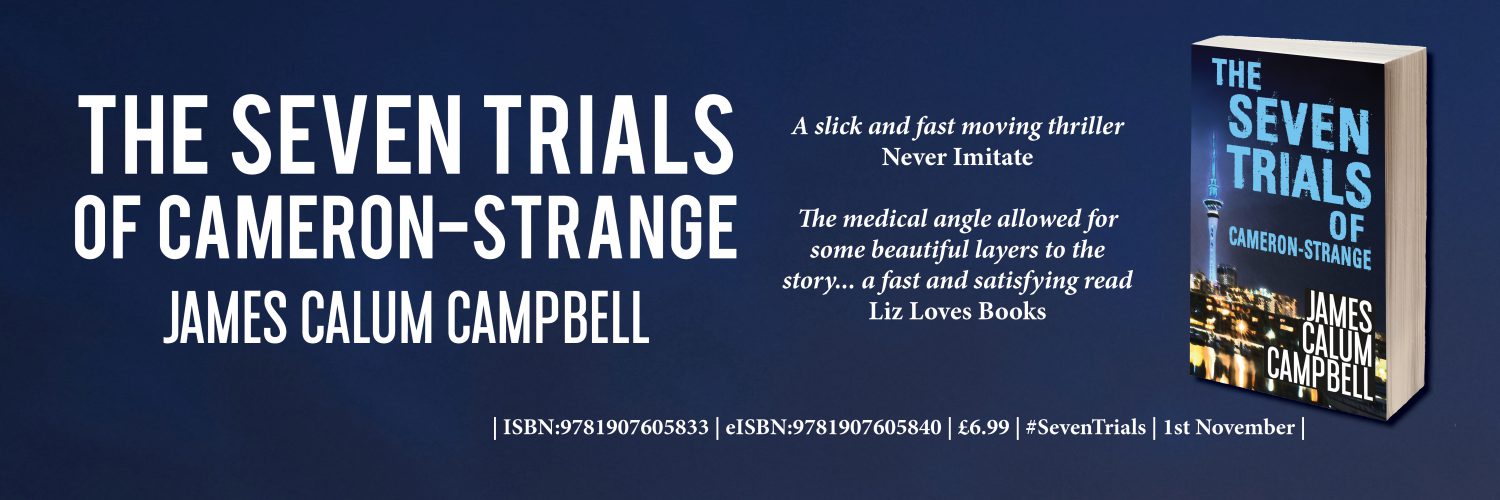
There’s a crossword in my forthcoming book.  It’s a “designer” crossword after the fashion of some of the Sunday broadsheets, with a theme obliquely alluded to in a rubric.  (In case you find that a complete turn-off, let me say that you don’t need to solve the crossword in order to read the book.  My main protagonist does the solving for us.  There is however a piece of information so deeply embedded in the solution that I’m not even sure my publisher knows it’s there.)

I wonder if solving cryptic crosswords, like playing chess, is predominantly a male pursuit.  I say that with the greatest respect.  Most of the women I know have far too much emotional intelligence to waste their time on inanimate and schizoid activities.  I’m aware myself that cruciverbalism is largely a sterile and self-referential activity.  Never look at more than one crossword in a day and never give it more than half an hour.

Still, anagrams are great fun.  Monday – dynamo; orchestra – carthorse… and who would not be delighted by Britney Spears – Presbyterian?  The ultimate anagram is the “panagram” or anagram of the alphabet.  When I was told there was only one panagram in the English language (Cwm fjord-bank glyphs vext quiz), I strove to find another.  I came up with one last year following a report in The Herald about the littering of beaches in the Bahamas that seriously upset one of the residents – Sean Connery.  (Incidentally I wish Sir Sean would come over and exercise his considerable charisma on the good burghers of Glasgow to get them to clean up Great Western Road.  I love my home town but it resembles a professional man, down on his luck, who begins to descend the social scale, ceases to take an interest in his appearance, and loses all self-respect.  I go out of my way to mention this here, in order to discharge a duty to a good friend of mine, resident of Great Western Road, who wishes to spread the pick-up-your-litter message and regards me as his surrogate blogger.)

To return to Nassau… It can’t be as bad as Glesgae.  I mean, are there half-eaten kebabs?  A panagram on unspecified Caribbean flotsam and jetsam:  I imagined it as a text message the MI6 quartermaster sent to his boss:

M: Gulf wrack hext spy, viz, J. Bond. Q

The Herald didn’t publish that either.

I know; I really do need to get out more.

JCC

“It is what it is”

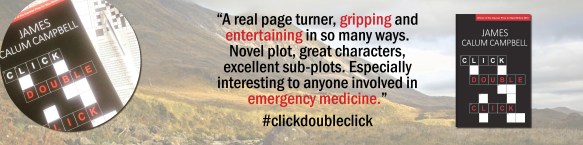
The central protagonist of “Click, Double-Click” is a doctor who rails against the bureaucracy.

I ran into an emergency physician of my acquaintance last week and asked him what he thought of “the four hour rule”.  In the language of medical “audit”, the four hour rule is a “criterion”.  The press often define the four hour rule in a rather slipshod way: all the patients have to be “seen” within four hours.  This is not accurate.  The criterion is that all patients should be discharged from the emergency department within four hours, irrespective of their “disposition”.  “Disposition” is a euphemistic softening of the word “disposal”.  We don’t “dispose” of patients; at least, not yet.

Medical managers remain infatuated with “targets”.  In the language of medical audit, a target is a “standard”.  Hence the standard might be that 95% of patients must be discharged within four hours.  The standard often looks as if it has been plucked out of the air.  After all, if it’s a good idea, why not make it 100%?  The achievement of the standard would be regarded as a “surrogate marker” for “quality”.  It seems clear to me that it is quite the opposite; the easiest way to meet the four hour rule is to drop all ambition for quality.  I told my ex-colleague that I thought the four hour rule, to borrow an expression that has found favour with some of our politicians, “a steaming pile of nonsense.”  Quality with a capital K.  Did he agree?

Well, I thought he might say yes, or no, or even the nuanced “yes and no”.  In fact, he shrugged, and said, “It is what it is.”

I have been worrying about the expression “It is what it is” all week.  What can it possibly mean?  In one sense it clearly means nothing.  It’s an expression of indifference, a verbalised shrug.  There’s no point in whingeing about the four hour rule because it can’t be changed.   It’s like the weather, or one’s mortality, or the second law of thermodynamics.

“It is what it is” need not be tense-specific.  In referring to the past, “What has happened, has happened.  The important thing is we draw a line…”  In the future, “What’s for you will not pass you by.  Que sera…”

“It is what it is” is in fact a surrogate marker for the condition of being downtrodden.  Whenever you say it, you are admitting defeat to the bureaucracy.  You are turning yourself into an automaton.  You become a functionary who occupies a station along the conveyor belt of a sausage factory.  Don’t do it.  Never shrug.  If you find yourself saying, “It is what it is”, make damn sure you really are talking about the second law of thermodynamics.

One thing I’ve noticed about hare-brained schemes such as the four hour rule, is that sooner or later, even the people who dream them up eventually realise they are worthless.  Then something curious happens.  History is rewritten.  “The four hour rule was right for its time, but has outlived its purpose.  We need to change, going forward.  What has happened, has happened…”  This is prelude to the introduction of the next steaming pile of nonsense.  You might say, “It isn’t what it is…”

The Good Samaritan

When I retired from medical practice just over a year ago I retained some insurance with my medical defence union that would cover me in the event of my offering a patient necessary and immediate care.  This is known as “Good Samaritan” cover.  The expression is apposite; the first time I had cause to assume the Samaritan role was in a city in the Scottish central belt.  A gentleman, rather down on his luck, asked me if I would attend his friend who had fallen down an embankment in an out of the way location. As we made our way to the patient, along a woodland path, we actually passed the priest and the Levite going the other way (Luke 10, 30).  The second time, I drove round a particularly treacherous hairpin bend near where I live to come upon the sight of two men (truly Good Samaritans) dragging an injured man from the flaming wreckage of two vehicles.  Then the whole crash scene exploded like something out of Hollywood.

There is clearly an element of personal risk involved in any medical intervention, and if you read any First Aid Manual, the order of events in resuscitation (Airway, Breathing, Circulation…) is always preceded by a cautionary note.  Take a long hard look at the situation and appreciate just what it is you are getting yourself into.  Don’t be the victim of “the second crash”.

This raises a beguiling question. Would Jesus have advised the Good Samaritan to take out Good Samaritan cover?  It sounds like one of these self-referential conundrums of the sort that keep philosophers awake at night.  My instinct is that Jesus would have regarded his Heavenly Father as more than adequate indemnity.  You might say to him, “What’s going to happen to me if I get involved?”  And he would point to the injured patient and say, “What’s going to happen to him if you don’t?”  But it’s always a risky business to second-guess what Jesus would do.  He would answer your question with some deeply subversive parable.  A guy attends a wedding and gets chucked out because he’s not wearing the right clobber.  What’s all that about?  It’s surreal.  It’s like a bad dream from which you wake up in a cold sweat.

I always enjoyed opportunistic medicine.  When the flight attendant asked, is there a doctor on board? – I always went, and it was always deeply rewarding, not just in the sense that they would bump you up to first class and give you something out of duty free.  It is a profound privilege to enter people’s lives in a unique way, the lives of the patient, the patient’s companion, the cabin crew, the Captain.  When you are seeing your thirtieth patient on a Monday afternoon it can all seem a little humdrum, but when you are called unexpectedly to treat somebody when you’re on holiday, you attain a fresh perspective and you suddenly realise that the craft you practise is intensely interesting.  Opportunistic medicine also frees you from the burden of time management.  In medical practice you are often more worried about the patients stacked up in the waiting room than the patient before you.

So I’ll stick my neck out and hazard the guess that Jesus, in his role as Consultant Physician, would say to his junior doctor disciples, if you get the call, go.  You have no idea where it will take you.  Put your faith in the Almighty… and the MDDUS.

…or the MDU, or the MPS… Other providers are available.

Music hath charms

“Click, Double-Click” has a classical soundtrack.

In writing about music, I have tried not to be preciously sentimental.  Music – I mean the great European tradition of classical music – gets talked up.  Three statements in particular, commonly reiterated about great music, seem to me to be profoundly untrue.

The first is that music is a universal language.  Actually great music has as many different languages as there are great composers.  The language arises from a time, a place, and a culture.  If some music doesn’t export very well it may be because the listeners don’t understand the language.  It may not even be understood on home territory.  An outstanding example of this in my opinion is the music of Arnold Bax, who was born in London in 1883 and who died in Cork in 1953.  He had a huge musical talent and a prodigious output.  You could be forgiven for thinking the only thing he composed was the tone poem Tintagel .  I drove into Tintagel in Cornwall with the car windows down and the tone poem blaring on my CD.  Nobody noticed.  (Incidentally, Tintagel is a beautiful natural setting but a bit touristy.  Bogus Lancelot.)

Why does nobody play him?   It’s the language.  It’s not traditional pastoral English music.  It’s Celtic.  Bax used to travel to the west coast of Scotland, and stay in the Morar Station Hotel, to finish his symphonies.  I’ve stayed there, searching for his spectre up the staircases and along the lobbies.  I’m on a pilgrimage.  There is no blue plaque at the entrance.

Tied in with this notion of music qua language is a second musical falsehood – the notion that you should give your undivided attention to great music, or not at all.  I learned my Bax symphonies – seven of them – while I was driving the car.  There is something about divided attention that makes us curiously receptive to music.  In one instant it is a foreign language, and in the next, you understand it.  You suddenly discover that you know it.  Your musical memory tells you what is going to happen next.  You have learned the music, effortlessly, the way a child picks up a language.  It’s a revelation, like speaking in tongues.  But whatever else you’re doing must be semi-automatic.  I would never put on a CD and then try to write – although sometimes I play a brief piece prior to writing, in order to create a mood.  Some people think listening to music in this way is disrespectful, but the music is beyond harm, and will not harm you either.

The third musical falsehood is the notion that music can heal the world.  It has become a cliche for conductors at the Last Night of the Proms to make a speech about the power of music to solve human problems of violence and conflict.  It certainly hasn’t worked yet!  Some of the greatest exponents of music who have indeed been prepared to exert a benign influence in human affairs have been extremely guarded about the power of music to influence international politics – I think of Menuhin, and Barenboim.

So much for what it is not.  Yet for all that, I do believe music is therapeutic, not just in the broad sense that it is uplifting to hear Bach played at a loved one’s funeral, but much more specifically.  I have a notion that music is good for our brains.  It is known that regular physical exercise helps to preserve memory.  It is believed that regular mental exercise does the same.  I have a hunch that the act of listening to, or even more so playing, music, prolongs active thought in a global way.  I’m not sure what the evidence base might be for this.  It would be a good PhD research project.  As they say in the best academic journals, more work is needed.

He said she said…

The other day in Glasgow I passed two young ladies in the street and caught a snatch of animated conversation:

“An’ I was like… an’ he was like… and it was effing so not cool.”

I recognised a Dutch accent.  Wonderful linguists, the Dutch.  Perfect, idiomatic English.  Then I remembered a schoolteacher friend of mine, who is continually berating his pupils for using, like, the L word.  “What does it mean?  It means nothing!  It’s padding.  Verbal upholstery.  The L word is even worse than the F word.”

That conflates two editorial difficulties for me, with regard to verbal upholstery.  In the throes of editing my tome, I’m trying to cut down on the verbosity.  I’m often struck by the pedestrian trudge of reported conversation in fiction.  He said… she said…  It’s so prosaic!  Or do you use the convention of inverting subject and verb? – asked he.  But that has an archaic ring.  “La!  Upon my word Miss Bennet,” said Mr Collins.  Another solution might be borrowed from Boswell who recorded Dr Johnson’s conversation verbatim.

‘We talked of Mr. Burke. – Dr. Johnson said, he had great variety of knowledge, store of imagery, copiousness of language. – ROBERTSON.  “He has wit too.” – JOHNSON.  “No, sir; he never succeeds there. ‘Tis low; ’tis conceit…”‘

It’s like a film script.  That conversation occurred on Sunday August 15th, 1773, yet has a rather contemporary ring.  The following day Boswell recorded a conversation that might have occurred last week.  I take a liberty:

‘I here began to indulge in old Scottish sentiments, and to express a warm regret, that, by our Union with England, we were no more; – our independent kingdom was lost.  Johnson was like, “Sir, never talk of your independency, who could let your Queen remain twenty years in captivity, and then be put to death, without even a pretence of ‘ustice, without your ever attempting to rescue her; and such a Queen, too!  as every man of gallantry of spirit would have sacrificed his life for.”  Worthy Mr. James Kerr, Keeper of the Records, was like, “Half our nation was bribed by English money.”  Johnson was like, “Sir, that is no defence: that makes you worse.”  Good Mr. Brown, Keeper of the Advocates’ Library, was like, “We had better say nothing about it.”‘

You can see that the word “like” serves to invest reportage with the air of an enacted dramatic scene.  “Like” casts a floodlight on a vignette.  A literal translation of “like” might be “so to speak”, “or as it were”.  Hence the scene assumes the metaphysical significance of a figure of speech.  Shakespeare might have said, “Thou has nor youth, nor age, but, like, an after dinner’s sleep, dreaming on both.”

Then there is that other great upholsterer, the F word.  Some people can’t utter a sentence without shoving it in, even mid-syllable:  “I was effing abso-effing-lutely effed.”  Whenever I insert it into my fiction (strictly and sparingly in pursuit of realism) I can sense the disapproval of my late father.  He didn’t care for what the BBC calls “strong language” – actually they mean bad language.  When I entered my rebellious teenage years and started cussing and swearing, my father would say to me, “Kindly refrain from bringing the language of the gutter into this house.”  In my whole life I only ever heard him utter even a mild profanity once, and it was to recount an anecdote.

“Does this train stop at St Enoch’s?”

“Well there’ll be a hell of a dunt if it doesnae.”

You have to know St Enoch’s was a terminus.  It’s a joke about buffers, like.

“Click, Double-Click”

Cybernetics-wise, for me, it has been a trying week.

First, my printer packed up.  I tried the usual tricks – logging off, rebooting, shutting down, starting up, plugging, unplugging.  But when I tried to print out various works-in-progress they merely joined a waiting list.  I needed a seven year old child to help me navigate through various menus but I didn’t have one to hand.  So I gave up and phoned the help desk.

I have written a novel, working title, “Click, Double-Click”.  You may infer that computers play at least a cameo role.  I have an uneasy relationship with these contraptions.  I have sympathy with the Luddites who took sledgehammers to the cotton looms at the dawn of the Industrial Revolution.  I’m often tempted to take a sledgehammer to my hard drive.  Instead, I attended an anger management class.  Virtual, of course; that is to say, it was in my own mind.  I learned to walk away.  I entertain the notion to walk away for ever.  I call it my “Innisfree Impulse”.  It’s a deep, nostalgic longing for a simpler life.

The help desk sorted my printer.  In fact they administered a rather over-exuberant purgative and it leapt from its constipated inertia and started, unbidden, to churn out endless reams of A4.  I felt like The Sorcerer’s Apprentice.  Then everything – everything – froze.  I got back on the phone.

“Hello you are through to Erin (not her real name) may I take your postcode?”

Then, an impossibly erudite question, something like, “Have you got doubledigit PDQ eclectics on your hyperspace cookieblog toolbar?”  I panicked, I tried to bluff.  “Ye-es.”

“You don’t have a clue what I’m talking about do you?”

“No-oh.”

I had to admire Erin.  She had endless patience.  She realised pretty quickly she was dealing with a digital half-wit, and offered to take over and sort the thing out remotely.   It’s rather spooky when the cursor starts to dance around the screen of its own volition.  You have invited a poltergeist on to the premises. Pretty soon, kitchen appliances will start to fly around.

At length, Erin made a diagnosis, some sort of autoimmune pathology deeply embedded in the antiviral package.  “There’s a problem with MacPherson.”  (not her real name; she pronounced it ‘MacFierce’n’.  I’m going to take out MacPherson.  OK?”

“Sure.”  I was sanctioning a contract killing.

“You can always put it back later.”

“No, no.  MacPherson’s history.  MacPherson’s toast.”

During the execution of the hit (I should say MacPherson’s up and running again and thriving; no apps were harmed in the making of this blog) there was something hilarious going on down the phone.  Was I being mocked?  No, a charity mugger was trying to extract £3 from Erin for a tombola in Rotherham.  I asked if that was where she was phoning from.  No, Sheffield, just down the road.  It might have been Khartoum for all I knew.  It was a moment of rare human contact.  If the word “Kafkaesque” means anything, it must refer to our isolated existence in a dehumanised world.  Don’t they make cutlery out of steel in Sheffield?  Or is that all gone, one dark Satanic mill supplanted by another.

She beat the chugger down to £1.  And sorted my computer.  Erin, I’m deeply grateful.  But I’m not done with my Innisfree Impulse.  I’m with Yeats on this.  “I hear it in the deep heart’s core.”

Impress New Writers Prize 2014

As I have been lucky enough to win the 2014 Impress New Writers Prize, Impress Books have asked me to write a blog and I promised, as a New Year resolution, to get started.

I don’t know the first thing about blogging.  I am “blog naive”.  So, as you can see, it’s a pretty plain vanilla operation.  I will blog once weekly, and try to add a few bells and whistles as I go.

But I should say something about myself.  If I were writing a blurb for the back cover of my book, one of these brief paragraphs that seems to conceal more than it reveals, it might go something like this:

James Calum Campbell was born in Glasgow.  He read English at Glasgow and, subsequently, Medicine at Edinburgh, and counts himself fortunate to have practised Medicine all over the world.  Thirty two years later he hung up the stethoscope to devote himself to writing.  He divides his time between Scotland and New Zealand.

If that has a linear quality, put it down to the demands of Medicine.  Although I have plenty of hobbies and pastimes, I have found it impossible while in practice to undertake anything else in a serious way.  Medicine is a devotion.  Nonsense! – I hear you say.  Roger Bannister ran a four minute mile while he was a medical student.  Yes, that was a remarkable achievement.  But then he retired from athletics and became a neurologist.

It’s hardly surprising that I have written a book about a doctor and, to an extent, about Medicine.  Somerset Maugham who studied Medicine and then went off to write, expressed regret that he had not spent some years in practice, as the experience would have afforded him a rare access to life in the raw.  There is some truth in that, but it comes with caveats.  The medical profession can be smug about its supposed literary skill.  Medicine is inherently interesting – look at the popularity and longevity of TV medical soaps.  But there is always a danger of slipping into a kind of rumbustious undergraduate style – call it “Medical Baroque” – full of pus, and sex.

Then there is the secrecy of the confessional.  I have been told so much, and I can tell you none of it.  Churchill’s personal physician, Lord Moran, wrote a memoir following his patient’s demise, and got into a bit of trouble.

My interest in Medicine has always been diagnostic; I love the “undifferentiated” problem posed by the acute presenting patient, so I worked in the fields of Emergency Medicine and General Practice.  In the Emergency Department, the most powerful question you can ask your patient is, quite simply, “What happened?”  Over the years I came to realise that all you had to do then was shut up and listen.  Nine times out of ten, the diagnosis would be handed to you on a plate.  But I also realised that this apparently passive activity of listening was itself a devotion.  History taking is not merely a question of trafficking in information.  The listening doctor offers to step into the patient’s shoes.  It’s like a trance; for a moment, you become the patient.  It is an experience at once rewarding, and debilitating; it comes at a cost.

It comes at the cost of silence.  “What happened?”  I cannot say.  Everything is transmogrified.  If I have buried my identity, it is because I wish to say to my patients, “This is not about you.  It is not even about me.”

But I haven’t really changed my name, merely lost it somewhere in translation.

Yours,

James Calum Campbell